
CELTA, TEFL, TESOL, Travel abroad
Is It Time to Leave Teaching in Vietnam?

Sep
When did teaching in Vietnam become this complicated?
I have to admit, after living and working in Vietnam for years, I never thought I would be writing a blog asking whether it is time to leave teaching in Vietnam.
But here we are.
– And before anyone jumps in with “If you don’t like it, leave”, that isn’t actually the point.
I like Vietnam. I’ve lived here for years. I’ve worked here, taught here, built my business here and recommended Vietnam to thousands of teachers over the years. I know there are rules, and I have absolutely no problem with teachers having to meet the legal requirements to work here. In fact, I have always been one of the people telling teachers: get your paperwork right, work legally and don’t take shortcuts. But recently I have found myself asking a question I honestly never thought I would ask:
Is it actually becoming too difficult to teach legally in Vietnam?
And I don’t mean difficult because you don’t have the right qualifications or because you are trying to work under the radar. I mean difficult even when you have the qualifications, the experience, the genuine documents and you are actually trying to do everything properly.
My latest experience has been over something that, to me, is completely ridiculous. My passport has my full legal name, including my middle name. My TEFL certificate, which I completed many years ago, has my first and last name on it. This is hardly unusual. In the UK, we quite often don’t use our middle names on everyday documents. It doesn’t mean that the person on the certificate is somebody else! My TEFL certificate is genuine. It has already been properly certified and notarised, and I have been using it for years. However, I have now been told that I may need an affidavit confirming that the person named on my TEFL certificate is actually the same person as the person named on my passport. So basically, I need a legal document to confirm that I am me!
Now, perhaps there is a perfectly good legal reason for this. I am not pretending to be a lawyer, and I am certainly not saying that every teacher in Vietnam is going to have exactly the same experience. What I am questioning is how this is being interpreted and applied, because trying to get a straight answer has been surprisingly difficult and will be costly. At first, I was told that the TEFL needed to be notarised. I explained that it already was. Then there was confusion about whether I needed a notarised copy, a certified copy of my passport or an affidavit. Eventually it became clear that what was being requested was a declaration connecting the name on my TEFL certificate to the full name on my passport.
Fine. So how do I get that?
Well, apparently, I may need to obtain an affidavit through the UK Consulate. Then, once I have that, there may be further legalisation required in Vietnam before it can be used for the work permit process. And that is where I started thinking: How has something so simple become this complicated?
I am not somebody who has just arrived in Vietnam with a random online certificate and no experience. I have my Degree in Education, years of teaching experience and have been TEFL qualified for many years. I also run a business that deals with TEFL qualifications and helps teachers going abroad to work, so I am hardly unfamiliar with the documentation required for teaching overseas. Yet I am still sitting here trying to work out exactly what is required, who needs to do it, where if it needs to be done at all!!! Or whether I am going to have to start getting documents re-issued and re-certified because my middle name isn’t on one of them. And, of course, none of this happens to be free.
There are consular fees, legal fees, notarisation fees, legalisation fees and courier costs. If documents have to go back to the UK and then come back to Vietnam, that adds even more time and money. Then there is the possibility of waiting weeks for everything to be completed. And this is where I think we need to have a serious conversation about the direction things are going in Vietnam.
I completely understand why Vietnam wants to tighten up its work permit and immigration procedures. I actually think that is a good thing. There are far too many people working without the correct qualifications or documentation, and I have always supported proper regulation of the teaching industry. Schools should know who they are employing. Teachers should have genuine qualifications. Documents should be checked. People should be working legally and paying the appropriate taxes. I have absolutely no issue with any of that.
But there is a difference between making sure teachers meet the requirements and making the process so complicated that experienced, qualified teachers start thinking, “Do I really want to bother with this anymore?” And that is the part that concerns me.
 Vietnam has spent years building itself into one of the most popular destinations in Asia for English teachers. Teachers come here because there are jobs, the cost of living can be attractive, the lifestyle is good and, for many people, it is somewhere they can build a life rather than simply spend a year travelling. But teachers also have choices. There are plenty of other countries that want English teachers. Some have their own bureaucracy, of course, and I am certainly not suggesting that moving abroad means avoiding paperwork completely. But teachers are now looking at the whole package when deciding where to work. It isn’t just about salary anymore.
People are looking at the visa process, work permit requirements, qualifications, tax, cost of living, job security, how long paperwork takes, how much it costs and, importantly, how difficult it is to actually stay legally in the country. And if every year the process becomes more complicated, more expensive and more uncertain, eventually people are going to start asking whether it is worth it. The irony is that the people most likely to be put off may actually be the teachers Vietnam should want to keep. Experienced teachers & Qualified teachers. Teachers who have been here for years, understand the culture, understand the education system, have experience in Vietnamese classrooms and are contributing to the economy.
If those teachers start looking at the paperwork and thinking, “You know what, maybe I’ll go somewhere else,” then that isn’t necessarily because they don’t like Vietnam anymore. It may simply be because the hassle has become too much. And I think that is an important distinction. I am not writing this article to tell everyone to pack their bags and leave Vietnam. I am not saying that the country is suddenly impossible to work in, because it isn’t. What I am saying is that things are changing, and teachers need to be aware of that.
Something that was accepted previously may now be questioned. A document that was perfectly acceptable several years ago may suddenly need additional verification. Schools and agencies may interpret requirements differently, and teachers can find themselves caught in the middle trying to work out exactly what they are supposed to do. That is incredibly frustrating when you are actually trying to comply with the rules. And perhaps this particular situation will turn out to be nothing more than an annoying bit of bureaucracy that gets resolved. Hopefully it will. But it has made me think about the bigger picture.
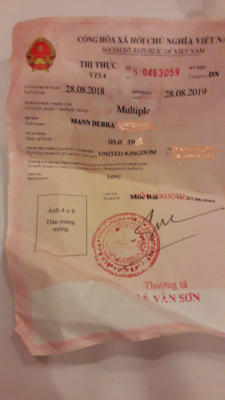 I have spent many years telling teachers about the opportunities available in Vietnam. I still believe there are opportunities here, and I still think Vietnam can be a fantastic place to live and work. But I also think we need to be honest with teachers about the reality of working here.
- Don’t just look at the salary.
- Don’t just look at the cost of living.
- Don’t just look at the photos of people sitting on a beach with a laptop.
Look at the paperwork. Look at the visa requirements. Look at what happens when something on your documents doesn’t quite match. Ask who is responsible for your work permit. Ask what happens if the paperwork is delayed. Ask what happens if the rules change.
Because once you are here, these things aren’t just administrative details. They can affect whether you are legally able to work and whether you can actually stay in the country. So, is it time to leave teaching in Vietnam? For me, I don’t know yet.
I certainly haven’t reached the point of saying I’m leaving Vietnam because of one frustrating experience. But I have reached the point where I am questioning whether the balance between the opportunities and the bureaucracy is starting to change. And if I’m thinking about it, I suspect a lot of other experienced teachers are too. Maybe this is just a temporary period while new requirements are being introduced and everyone works out exactly what they mean.I hope so.
Because Vietnam has a lot going for it, and I would hate to see good, experienced teachers deciding that the easiest solution is simply to go somewhere else. But teachers do have choices. And eventually, if staying becomes more difficult than leaving, people will make those choices.
Debra ‘Caroline’ Mann 18/9/2026